Showing posts with label maritime law. Show all posts

Sunday, April 26, 2015

MY VOYAGE WITH INDIAN GRACE.


                      (V.M. Syam Kumar, Advocate, High Court of Kerala)
Every branch of law has its own share of land mark judgments. They are important mile stones in the evolution of law. Teachers teach them with emphasis and students study them earnestly. The study of law of tort is thus incomplete without reading Donogue V. Stevenson. Similarly, Constitutional law cannot be taught excluding Marbury v. Madison. Students of Contract law cannot ignore Carllil v. Carbolic Smoke Ball Co. and Company law demands deep acquaintance with Salomon v. A. Salomon & Co. They are cases which are to be chewed, eaten and digested at the law school. Maritime law too has its own fair share of land marks to offer. The House of Lords decision in MV Indian Grace is one among them.
Whatever cult status these legal land marks may have had at the law school, they are soon forgotten when we are out of the law school. The name of the case may still ring a bell, but the specifics may no longer be retained. Practice as a lawyer throws up other important legal norms of contemporary relevance to be remembered and the earlier land marks gradually fade from memory. They have only ‘academic relevance’ now. Further as most of these land marks are antiques from by gone times, they are seldom cited as authority of value since much water might have flown thereafter.  At the best, a passing reference may be made to them in a case of comparable facts or legal issues. That too only before a so called ‘academically inclined judge’, whose creed is fast vanishing.
Never in our wildest dreams do we expect to be part of the said land mark judgments or to get an opportunity to argue them out afresh. Who would expect to get to argue Donoghue V. Stevenson in the court room all over again as a lawyer for one of the parties to the dispute. We presume, and rightly so that the ginger beer consumed by Mrs. Donoghue would have long been digested with or without the snail and the smoke balls that Mrs Louisa Elizabeth Carlill had purchased to cure her aliment of flu would not survive beyond the date of the judgment in Carlill v. Carbolic Smoke Ball Co.
Similarly, while at law school I had like all my class mates expected that MV Indian Grace would have completed her voyage long back and all legal issues involving her cargo of shells and cartridges would have been laid to rest with the House of Lords decision. We presumed that the shells and cartridges carried on board MV Indian Grace for use in the Bofors howitzer guns acquired by Indian armed forces would all have been expended on our enemies at the borders.  Dr. A.M. Varkey our professor at Law school had made each of us read through the MV Indian Grace decision over and over again to impress upon the nuances of admiralty jurisdiction and the vexing issues concerning in rem and in personam actions involved therein. Like the rest, I expected MV Indian Grace to be relevant only for what is contained in the House of Lords decision. I was utterly wrong in presuming so.
By some strange twist of fate, after enrolling as a lawyer I had to be party to the  final legal voyage of MV Indian Grace and was called upon to defend her based on those very same issues and facts about her and her cargo which I had learned by heart at the law school.  
It all started one day with a dusty and shabby case bundle which I saw resting on my table upon my return from the court. I had just shifted my practice to Kochi and had joined the law firm Southern Law Chambers. I had had a prior stint as a junior to the legendary maritime lawyer S. Venkiteswaran in the Admiralty Court of Bombay. After my return I had just started attending the firm’s work and the bundle had been placed on my table at the instructions of the Senior Partner. It carried a note that I shall study the file and be prepared to argue the case as and when it comes up for hearing. It was clear that the green horn from Bombay with a Masters degree in Maritime law and bearing the tag of being the junior to the best maritime lawyer in India was being put to test. I carried the file home for study and slept over. Early morning next day, I proceeded to open it up and the contents revealed a suit filed by Government of India to recover some amounts from a company by the name M/s. India Steam Ship Company purportedly towards damages for the alleged short landing of some military equipment. The suit had been decreed and the defendant shipping company had come up in appeal before the High Court of Kerala challenging the judgment and decree of the Subordinate Judge, Cochin. The plaint disclosed the name of the vessel in which the cargo was carried and owned by the defendant M/s. India Steam Ship Company as MV Indian Grace.
The initial feeling that possessed me on reading the name MV Indian Grace was more that of a cheeky little surprise. What kind of coincidence could it be that there is another vessel bearing the same name as the legendary Indian Grace. I proceeded find out by reading through the dusty and worn out bunch of documents in the bundle. There was nothing in them connecting it to the House of Lords decision in the classic English case of MV Indian Grace. It spoke nothing about action in rem or action in personam and it related only to a simple suit for damages filed in the Subordinate judge’s court of Cochin.  So this could never possibly be the same ship MV Indian Grace about which every student of maritime law across the world is taught.
Later that day, I consulted my colleagues at the firm and asked them about the dirty bundle. All that they knew about it was that it is an old file that had been lying there since years and that the every time the matter came up for hearing, it was being adjourned by the Government Pleader. None of them knew about MV Indian Grace and the strange similarity that the subject vessel in the file bore to the land mark decision.  
As I had by then forgotten the specifics of the House of Lords judgment in MV Indian Grace, I decided to consult Christopher Hill the acclaimed author of “Maritime Law”. What I read left me startled. This is what he had to say on MV Indian Grace:
 “A case on the point is the Indian Grace (1998)1 Lloyd’s Rep. 1 HL. The plaintiff cargo owners brought proceedings against the owners in the Court of Cochin and then brought an action in rem in England. Subsequently judgment was delivered in Cochin. In due course owners submitted to the jurisdiction of the Admiralty Court. The plaintiffs threatened to arrest the vessel and security was provided. The issue was whether the England action in rem was ‘between the same parties or then privies’ within the meaning of sec. 34 as the action in which the plaintiffs obtained judgment in Cochin. When English action in rem was launched no judgment in personam in Cochin had yet been obtained; .....The English action was struck off. The case has been criticised by leading authors.” 
So the bundle in my hand was the appeal from the judgment of the Subordinate Judge’s court Cochin, which had been relied on by the House of Lords to strike off the English action. Issues in MV Indian Grace were thus still alive and kicking. The thrill that I experienced cannot be described in words. Here I had that once in a life time opportunity of pursuing further a case of classic genre. I set to task at once.
I rushed to the only place in the entire State which then had the Lloyd’s Law Reports, the most authoritative law reports on shipping cases from across the common law world, viz., the library of old High Court of Kerala at the Ram Mohan Palace. I knew from my daily visits, the exact place where the Lloyd’s Law Reports were stacked. No one came to that part of the library and the Lloyd’s Law Reports starting from 1918 to date remained neatly stacked in undisturbed slumber since ages. The book rack had by its side a window and one could stack books on its side, sit next to it and read. There was no electric fan over head but the gentle breeze that comes in once in a while through the window made reading there a pleasurable experience. For weeks, I spent all my afternoons perched on that window reading through the reports, ofcourse starting with the House Lords decision in Indian Grace.
The appeal to be argued before the High Court of Kerala though arising out of same facts was different from the legal issues considered by the House of Lords. Factual aspects as brought out during trial at Cochin assumed more relevance in the appeal. Comparing and confirming the factual observations in the judgment of the House Lords with the documents available in my bundle became by favourite enjoyment. The fire on board and the valiant efforts by the Master to put off the fire risking his life were all revealed from the documents. That the fire was not due to the actual fault or privity of the carrier and that the carrier was entitled to rely on the exception in the bill of lading was very evident.
The decision of the House Lords in MV Indian Grace had deeply affected the features of the in rem action till then exercised by English Courts. It was so important a land mark that, authors identified the different phases of legal growth by terming them as period before MV Indian Grace and after MV Indian Grace. Higher courts across the Common law world took note and relied on the decision in MV Indian Grace. Acknowledged experts on Maritime Law like A.M. Sheppard opined in their treatises that the decision was capable of drastically affecting some features of the action in rem followed in England till then. Since the House of Lords had relied on the Judgment of the Subordinate Judges Court Cochin in striking off the English action, the correctness of the said Judgment of the Sub court to be considered by the Kerala High Court in the appeal assumed relevance.
To my excitement the appeal was finally posted for consideration before a division Bench of the High Court of Kerala. After a fair share of adjournments from the part of the Government, the matter was taken up for final hearing and disposal. The senior presiding Judge being a former Civil Lawyer of standing and repute picked up the relevant facts deftly. The appeal was heard for days together. After noons were specifically set apart for exclusive hearing of the appeal. Carriers liability and intricacies of the term “actual fault and privity of the carrier” were considered by the Judges in detail. Scores of reports on the point from Lloyds Law Reports were placed before the bench by both sides. The response from the Bench was encouraging. It appeared that the Bench was convinced about the protections that the carrier and the vessel are entitled to under law. An important Judgment as a sequel to that of the House of Lords was in the immediate offing.
But before the Judgment could be rendered, to my dismay, the appeal was transferred to another Division Bench. We were back to square one. The presiding Judge here was a seasoned lawyer well aware of commercial legal practise. The Bench echoed the views of the earlier bench. Hearing went on for days. It would start off with a quip by the Judge, “Lets sail with Indian Grace.” Both sides argued in detail. Senior lawyer in the rank of Assistant Solicitor General of India appeared and argued for the Government. The Judge gave a peek of his mind by opining that the precedents and facts called for interference with the judgment of the sub-court. After days of lengthy hearing the new Division Bench proceeded to reserve the matter of dictation. We eagerly awaited a judgment capable of reporting across the maritime world from Kerala High Court, one that would be taken note of by English Lawyers and maritime experts. 
But MV Indian Grace was not destined to have a smooth legal journey. Before the date on which the judgment was to be delivered, the case was posted before the Bench by a process called ‘to be spoken to’. It was submitted on behalf of the Government of India that an amendment is proposed to be moved to hike the claim amount which at present was only for the short landed cargo. The Attorney General of India had in view of the failure of the English action, apparently suggested claiming a constructive total loss of the entire cargo and thus to enhance the claim amount from few lakhs to crores of Rupees. The rendering of judgment was thus sought to be adjourned to facilitate the filing of the amendment petition and the same was allowed. I had no reason to feel alarmed as the earlier two division Benches had been convinced of the case and was eager to render a detailed judgment touching upon all aspects of the case.
Within a week the appeal came up before another division bench.  The suggested amendment had not yet been carried and instead of seeking time for pursuing the same, the Government pressed for urgent hearing before the new bench. The hearing of MV Indian Grace thus commenced before the third division bench. Suffice to say that the Bench wound up the hearing within twenty five minutes and proceeded to deliver judgment dismissing the appeal.
Winning the appeal though was a prime objective was not the sole objective.  All through the hearing the single minded and earnest desire was that the judgment from the High Court of Kerala based on the detailed arguments placed by both sides touching on importance question of maritime law and carriage of goods by sea would lead to a judgment that will be a befitting sequel to the decision of the House of Lords in MV Indian Grace. The judgment that was finally rendered ran to less than four pages and carried a sentence to the effect that though numerous foreign decisions were placed before the Bench the same are not felt relevant to be discussed. Thus ended the long journey of MV Indian Grace.
I returned to office carrying the bundle which had now become huge with numerous copies of decisions from Lloyds reports.  I was visited by my senior partner with a comforting smile. He shared with me the wisest advice which I treasure all through the rest of my career. First one was “Never identify personally with the subject matter of your case however interesting it may be.” This was followed by a very practical advise which went like this. “When a case that had been heard at length by a Bench and is expected to be decided in your favour is sought to be adjourned by the opposite side, pray to the court that the same may be noted on file as PART HEARD.” This would have ensured that the matter would again come up only before the same Bench!
I realised that my theoretical knowledge of maritime law and my rummaging through volumes of Lloyds Law reports are no substitute to practical lawyering skills which can be acquired only through years of patient dedicated practise.
 Let me leave you with a sequel to this story. Around ten years after the above experience, at a private function I ran into the same Judge who had heard the MV Indian Grace appeal on its second round. He had since retired and to my surprise very well remembered the quip of sailing with Indian Grace. He told me that he had already dictated a detailed Judgment allowing the appeal filed by MV Indian Grace and same was not typed out and issued since the matter got adjourned.
                                                           ***

Sunday, April 15, 2012

THE LONG ARM OF INDIAN LAW - ENRICA LEXIE INCIDENT AND JURISDICTION OF INDIAN COURTS TO TRY THE ITALIAN MARINES.

(Author is a Lecturer for Law of the Sea and Maritime Law, National University for Advanced Legal Studies, Kochi.)

Does the arm of Indian law stop short at 12 nautical miles from Indian coast or is it long and capable enough of being stretched beyond that limit to further extents of her maritime zones so as to deal with perpetrators of crime within those zones? This is one among the many pivotal questions thrown up by the recent incident involving the Italian Vessel ENRICA LEXIE.

ENRICA LEXIE continues to be anchored in Indian territorial waters. Two Italian marines who were on duty on board the vessel are presently in judicial custody charged with the crime of shooting to death two Indian fishermen. They have been charged for murder under sec.302 of the Indian Penal Code.

There is tremendous public sympathy in India for the two fishermen who were shot to death.One among the diseased is survived by two minor girls, his sisters. Their parents are already dead and now their only brother has been shot dead. The other fisherman's family consists of a widow who has to bring up her two young children all by herself. Both families belong to economically weaker sections of Indian society and deserves maximum sympathy.

In Italy too there is great concern regarding the fate of the two marines who are now lodged in Indian prison awaiting a lengthy murder trial. A long drawn and onerous criminal trial, which could be a punishment in itself, awaits them, if the Courts in India turns down their preliminary objection regarding jurisdiction of Indian Courts to try them. Families of the marines in Italy have genuine reason to be concerned and the Italian Government is trying in earnest to resolve the quagmire.

ENRICA LEXIE incident catches the attention of a maritime lawyers not only from the above humanitarian concerns which vexes every lawyer, but also because it throws open a number of questions within and outside the realm of International Law especially that branch of it which we term as the Law of the Sea.

Though the questions regarding the scope and extent of coastal state's jurisdiction over adjoining waters have engaged attention of maritime lawyers since decades and was fairly thought to be settled, 21st century problems demand 21st century solutions.

Piracy, once thought to be dead and buried thus receiving a cursory and half baked attention even in the third UNCLOS, have spread it evil head so wide that world has to sit up and deliberate, lest incidents like ENRICA LEXIE are repeated.

21st century piracy, though said to be originating from Somali Coast but which is perceived of being controlled from world business capitals, is even threatening the life of innocent fishermen from tiny fishing hamlets along Indian coast where they have been engaged in small time fishing since time immemorial.

Bravado exhibited by US, Italian and even Indian navy so far in and around the Somali Coast, Arabian Sea and some areas of Indian Ocean in the pretext of containing piracy, but which many a times lead to shedding innocent blood are no more viable solutions to this deeper problem. India and Italy have learnt this the tough way with ENRICA LEXIE incident. Others might learn it later, albeit slowly but in a more gruesome way. This has to be avoided.

Since the incident is developing day by day let us save the larger issues involved in ENRICA LEXIE incident for discussion later and confine ourselves to the limited issue of the jurisdictional power or the lack of it, of the Indian Courts to try the Italian Marines alleged to be involved in the incident.

The Italian marines and the vessel are undoubtedly entitled to a fair trial and hearing. They should never be condemned unheard. Their legal and factual contentions deserve to be considered with due merit and they ought to be presumed innocent until found otherwise by a competent court of law. If they have a case that they are not governed by Indian law, that contention too deserves to be considered with due respect and if it is found that Indian law is not applicable they ought to be handed over to Italy for being tried under their law.

The question whether the Indian Courts have jurisdiction to try the two Italian Marines involved in the shooting of the fishermen from the Italian Vessel ENRICA LEXIE was specifically addressed before the Court by the relatives of the dead fishermen.

They had started by pointing to Sec.3 of the Indian Penal Code and then to two specific statutes that are in force in India. The statutes are the Admiralty Offences (Colonial) Act, 1849 and the Suppression of Unlawful Acts against Safety of Maritime Navigation and Fixed Platforms on Continental Shelf Act, 2002 (the SUA Act, 2002).

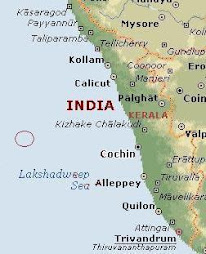
Though there exists some cloud over the exact distance from Indian base lines to the marine area were the shooting incident took place, even the State Police seems to agree that the same happened beyond the 12 nautical mile territorial waters of India but within the Indian Contiguous Zone and Exclusive Economic Zone.

That being the factual position, one is prone to jump to the conclusion that since the incident happened beyond Indian Territorial Waters neither the Indian law nor Indian courts have jurisdiction and ENRICA LEXIE being registered in Italy, the flag state law ie., Italian Law ought to apply in view of the principles of International Law of the Sea as settled under the UNCLOS .

But a conjoint reading of Sec.3 and the said two statutes clearly reveal that the Indian Courts are well within their powers to try the Italian Marines. Let us examine the provisions closely.

Sec. 3 of the Indian Penal Code reads as follows:

Sec. 3: Punishment for offences committed beyond but which by law may be tried within India: Any person liable by any Indian law to be tried for an offence committed beyond India shall be dealt with according to the provisions of this Code for any act committed beyond India in the same manner as if such act had been committed within India. (emphasis supplied)

Section 3 of the Penal Code reproduced above has the following attributes:

(a) It applies to all persons including foreigners and is not confined to citizens of India.

(b) The said section presupposes the existence of an Indian law under which a person can be made liable for an offence committed beyond India, i.e., beyond the territorial limits of India.

(c) If such an Indian law exists, then the person liable under that law is to be dealt with according to the provisions of the Indian Penal Code for such offence committed beyond India.

(d) While being so dealt with under the Indian Penal Code, a presumption follows that the offence had been committed within India.

Section 3 applies to all persons including non-citizens. Hence the Captain of the vessel as well as the two Italian Marines who are foreign citizens, presently in India are squarely covered by the said provision.

The Admiralty Offences (Colonial) Act, 1849 is a statute which envisages extraterritorial operation and specifically deals with and empowers authorities to take legal action with respect to admiralty offences or offences committed upon the sea i.e., beyond the territorial waters of India. The said Act is protected vide Art. 372 of the Constitution of India and continues to have extra territorial effect pursuant to Explanation II to Art. 372.

Sec. 3 of the Admiralty Offences (Colonial) Act, 1849 reads as follows:

Provision, 7c., where death in the colony &c., follows from injuries inflicted on the sea, &c.,-

Where any person shall die in any colony of any stroke, poisoning, or hurt, such person having been feloniously stricken, poisoned, or hurt upon the sea, or in any haven, river, creek, or place where the admiral or admirals have power, authority, or jurisdiction, or at any place out of such colony, every offence committed in respect of any such case, whether the same shall amount to the offence of murder or of manslaughter, or of being accessory before the fact to murder, or after the fact to murder or manslaughter, may be dealt with, inquired of, tried, determined, and punished, in such colony, in the same manner and in all respects its if such offence had been wholly committed in that colony; and if any person in any colony shall be charged with any such offence as aforesaid in respect of the death of any person who, having been feloniously stricken, poisoned, or otherwise hurt, shall have died of such stroke, poisoning, or hurt upon the sea, or in any haven, river, creek, or place where the admiral or admirals have power, authority, or jurisdiction, such offence shall be held for the purpose of this Act to have been wholly committed upon the sea.

The above provision clearly and unequivocally empowers the authorities in India to deal with offences committed outside India which during the time of the enactment was referred to as a ‘Colony’. Mark the words ‘or at any place out of such colony’ as it specifically empowers the authorities to deal with, inquire into, try, determine and punish the offence in the same manner and respect as if it has been committed wholly in India. Thereby the Indian Authorities are empowered to invoke Admiralty Offences (Colonial) Act, 1849 over and above the IPC and CrPC in the case of ENRICA LEXIE.

In February 2003 fifteen Indonesian pirates who had boarded a Japanese ship named Alondra Rainbow were successfully prosecuted and convicted in Mumbai, India invoking inter alia the provisions Admiralty Offences (Colonial) Act, 1849. All pirates were sentenced to seven years of rigorous imprisonment with a fine of Rs.3000 for each crew member, in default of payment of fine, to suffer further rigorous imprisonment for two months.

The Captain of the Vessel Enrica Lexie and the two Italian Marines could also be liable to be prosecuted under the SUA Act, 2002. The SUA Act, 2002 vide S.1(2) extends to the Territorial Waters, the Continental Shelf, the Exclusive Economic Zone and any other Maritime Zone of India within the meaning of the Maritime Zones Act, 1976. Thus the jurisdiction of Indian authorities stand extended beyond the territorial waters of India up to the edge of the exclusive economic zone which is 200 nautical miles from the baseline. Offences within the said zone are thereby punishable under the SUA Act.

The SUA Act defines the term ‘Ship’ in S.2(h) as to include any floating craft. Thus both Enrica Lexie and the fishing boat St.Antony are ships/floating crafts and are thereby amenable to the SUA Act. Chapter II of the SUA Act lists the various offences under it. It lays down the punishment for such offences as well. Thereby it can be seen that it is a complete code in itself. Section 3 (1) (a), (b), (c), Section 3 (1) (g) (i) (iv) and (v) and Sec. 3 (7) and (8) (c) of Chapter II of the SUA Act, 2002 are specifically relevant.

Relevant portions of Section 3 (1) (a), (b) and (c) of the SUA Act, 2002 reads as follows:

Sec. 3 Offences against ship, fixed platform, cargo of a ship, maritime navigational facilities, etc.-

(1) Whoever unlawfully and intentionally-

(a) commits an act of violence against a person on board a fixed platform or a ship which is likely to endanger the safety of the fixed platform or, as the case may be, safe navigation of the ship shall be punished with imprisonment for a term which may extend to ten years and shall also be liable to fine;

(b) destroys a fixed platform or a ship or causes damage to a fixed platform or a ship or cargo of the ship in such manner which is likely to endanger the safety of such platform or safe navigation of such ship shall be punished with imprisonment for life;

(c) seizes or exercises control over a fixed platform or a ship by force or threatens or in any other form intimidates shall be punished with imprisonment for life;

Section 3 (1) (g) (i) (iv) and (v) of the SUA Act, 2002 reads as follows:

(g) in the course of commission of or in attempt to commit, any of the offences specified in … clauses (a) to (f) in connection with a ship-

(i) causes death to any person shall be punished with death;

(ii) ……;

(iii) ……;

(iv) seizes or threatens a person shall be punished with imprisonment for a term which may extend to ten years; and

(v) threatens to endanger a ship … shall be punished with imprisonment for a term which may extend to two years.

(emphasis supplied)

Relevant portions of Sec. 3 (7) and (8) ( c ) of the of the SUA Act, 2002 reads as follows:

Sec. 3 (7) : Subject to the provisions of sub- section (8), where an offence under sub- section (1) is committed outside India, the person committing such offence may be dealt with in respect thereof as if such offence had been committed at any place within India at which he may be found.

Sec. 3 (8) (c) : No court shall take cognizance of an offence punishable under this section which is committed outside India unless-

(a) …;

(b) …; or

(c) the alleged offender is a citizen of India or is on a fixed platform or on board a ship in relation to which such offence is committed when it enters the territorial waters of India or is found in India.

Take special note of the words "is on a ...ship in relation to which such offence is committed when it enters the territorial waters" as also the words "or is found in India" in Sec. 3 (8) (c). In the case of ENRICA LEXIE the Italian marines were on ENRICA LEXIE when she entered Indian Territorial waters and moreover the Marines and the Captain are still in India. So the Act squarely applies to the facts of the case.

Further a reading of Sec. 13 of the SUA Act 2002 which provides for presumption of offences under sec. 3 should alarm any lawyer appearing for an accused charged under SUA. The said provision which shifts the burden of proof on to the accused could make the criminal trial a very arduous one for the accused.

In the light of the above said Legal norms which are presently in force in India, the two Italian Marines and the Captain of the vessel are liable to be proceeded in India under Indian law. If they are so proceeded and earnestly prosecuted there is a reasonably high chance that they will be convicted.

However as on date the Government of India has refused to invoke SUA Act, 2002 in the ENRICA LEXIE matter. Similarly unlike the Maharashtra Police who effectively invoked the provision under Admiralty Offences (Colonial) Act, 1849 the Kerala Police is refusing to invoke the same against the Italian accused.

Even after the lapse of more than one month after the incident and number of rounds of legal battles in the Courts, the investigating agencies have so far chosen not to invoke SUA Act 2002 nor the empowering provisions under the Admiralty Offences (Colonial) Act, 1849. They have charged the marines only under sec. 302 read with Sec. 34 of the Indian Penal Code (I.P.C.). It is trite law settled by innumerable precedents including those from the Supreme Court of India that I.P.C. and the Cr.P.C. have no applicability beyond Indian territorial waters extending to 12 nautical miles except under circumstances falling within Sec. 4 of IPC and Sec.188 of Cr.P.C. That it would be onerous to prove the existence of the said circumstances in ENRICA LEXIE incident is also evident. Thus charging the marines under the IPC and Cr.P.C. without invoking the SUA Act 2002 nor the empowering provisions under the Admiralty Offences (Colonial) Act, 1849 could lead to a situation where the Courts in India will after a point be compelled to acquit the accused marines.

By virtue of the norms put in place by the Admiralty Offences (Colonial) Act, 1849 and more recently by the enactment of the SUA Act 2002, Indian law does not invariably freeze, stultify or become ineffective upon reaching the outer limits of the territorial waters i.e., immediately upon reaching the outer limits of the 12 nautical mile territorial waters. The Courts and authorities in India are empowered, capable and competent under the said statutes to apprehend, try and punish perpetrators of crime as far as Indian Exclusive Economic Zone which is 200 nautical miles from the Base lines.

The 21st century world and the issues endemic to our times demand that Indian law needs to have the said extra territorial operation and vibrancy so as to retain the basic quality of law as a purposive enterprise.